
Flood Irrigation
There are different ways to irrigate a vineyard. The two most prevalent ways in Mendoza are flood irrigation and drip irrigation, depending on where you are. Both have unique advantages.
The irrigation systems developed by the indigenous Huarpe people before the arrival of Europeans were key to successful agriculture in the region, and these systems are still used today. For centuries, irrigation channels and aqueducts have channeled water from the Andes to the lower Andean areas, bringing fresh drinking water to cities.
Clearing up a Myth
Few vineyard practices are more misunderstood than irrigation. Typically visualized as occurring in hot, dry areas, irrigation usually involves methods like furrow or sprinkler systems to boost yields for table grapes and bulk wines. This underpins the prevalent belief, especially in France, that superior wines come exclusively from dryland viticulture, and that irrigation inevitably lowers quality. But really, what is irrigation? Simply put, it’s a man-made imitation of rainfall. Consequently, irrigation is unnecessary (and in some parts of the EU, even prohibited) in regions with ample rainfall, such as Burgundy, Bordeaux, Germany, and several others. Like all plants, grapevines require water; therefore, in places like Mendoza, where annual rainfall is minimal (Mendoza receives about 190mm annually compared to Bordeaux’s 950mm), but meltwater is abundant, irrigation is vital. While a slight degree of water stress is beneficial for fruit ripening and can improve wine quality, too much stress can be detrimental. In such cases, carefully controlled irrigation can enhance quality.
Drip Irrigation vs Flood Irrigation
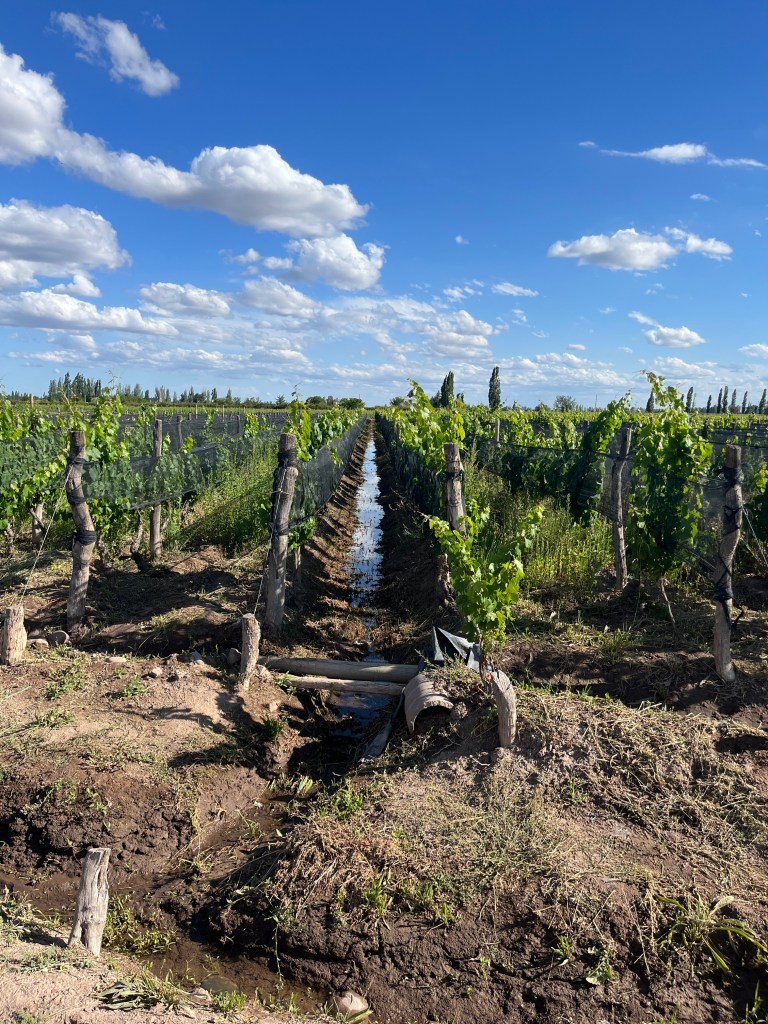
In Mendoza, the two most prevalent ways to irrigate a vineyard are flood irrigation and drip irrigation. For drip irrigation, dripper supply lines, usually long plastic tubes, are placed down each row, usually with one dripper at each vine. For the ancient flood irrigation, which is the irrigation used for our vineyard, water fed from a supply canal is run down the rows and is soaked up by the dry ground.

Why Is Flood Irrigation Special and Why Is It the Right Method for Our Vineyard?
Water Available in Abundance
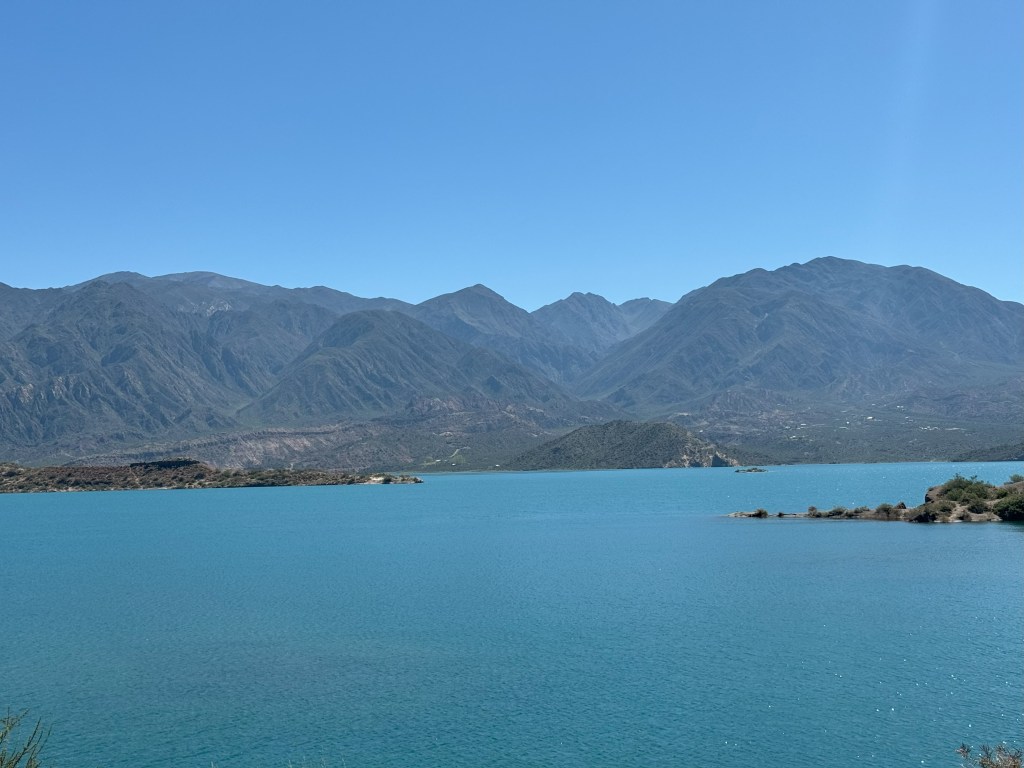
Firstly, we are not wasting water. We only irrigate during the very hot days in the growing period, once or twice a week, and only as much as our vines need. Although rainfall is minimal, meltwater from the Andean glaciers is abundant. It is stored in Lake Potrerillos and then channelled to Mendoza via the Rio Mendoza. This gives us the chance to irrigate our vineyards with very cool and clean water.

Ancient Skill: Carrying out flood irrigation properly is not an easy task; it takes someone with experience who has mastered this ancient skill. A prerequisite for flood irrigation to work is that the land must be generally flat. But it can’t be totally flat; otherwise, the water would not flow through the canal. Our vineyard is 700 meters long and has a difference of 5 meters in altitude from the beginning to the end. This means the canals have to be designed with the right slope. If the canal is too steep, the water will flow too quickly and wash out the canals. If the canal is too flat, the water will flow too slowly and will not reach all the vines. If the canal is too deep, water will be wasted. Only with the right design of the canal, flood irrigation can be achieved in a way that preserves resources and does not overwater the plants. Luckily, the family of our “encargado” (person in charge) Alejandro has been passed down this knowledge through generations, so we are in good hands.
Positive Effects on the Wines Acidity:
Let’s go to chemistry class together and talk about our soil. Our soil is very sandy, meaning that the water coming by flood irrigation quickly seeps deep into the ground. Therefore, our plants must reach deep into the ground to access the water. Luckily, they have no problem doing that since they are over 100 years old and have well-developed root systems. On the other hand, if we were to irrigate by drip irrigation, there would be a constant small supply of water, and the vines would draw their water from the surface. What’s the difference? In our soil, the upper layers are richer in potassium than the lower layers, meaning if we used drip irrigation, our vines and grapes would take in higher levels of potassium. Is that good or bad? Well, it depends on various factors, one of the biggest being the grape variety. For example, Riesling is naturally very high in acidity, so a higher potassium intake can be welcome to make the wine smoother. Malbec, on the other hand, is naturally not as high in acidity, so a lower acidity through higher potassium intake would detract from the freshness and aging potential of our wines.
Of course, we cannot generalize and say that flood irrigation always leads to higher acidity. Soil types, temperatures, and many more factors play a role, but in our case, flood irrigation indeed leads to better wine.
Aids the Vineyard’s Health:
Our vines are ungrafted. On the positive side, this means they show the purest expression of Malbec since they are on their own rootstock. On the negative side, it means they are not immune to harmful diseases like nematodes or phylloxera. Generally, these find it hard to thrive in sandy soils like ours in Perdriel. But flood irrigation provides another helping hand by flushing these viruses out of the vineyard.
We hope this page gave you a better understanding of our irrigation method and why we employ it. If you are interested, you will find two videos below showing how the irrigation looks in the vineyard.